


Conference Report: Global Dissonant Modernities - International Conference and Emerging Professionals Workshop, 17-21 August 2026, Almaty, Kazakhstan
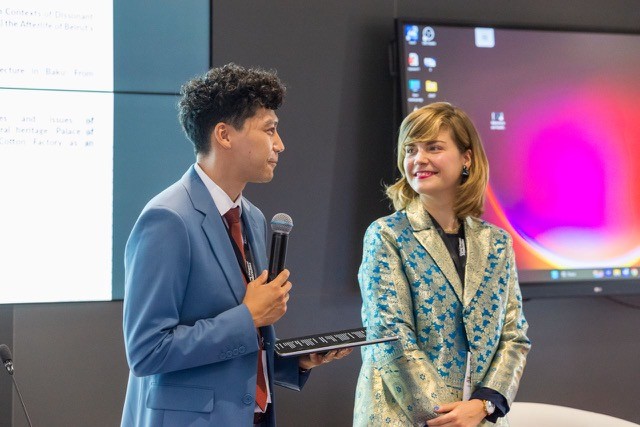
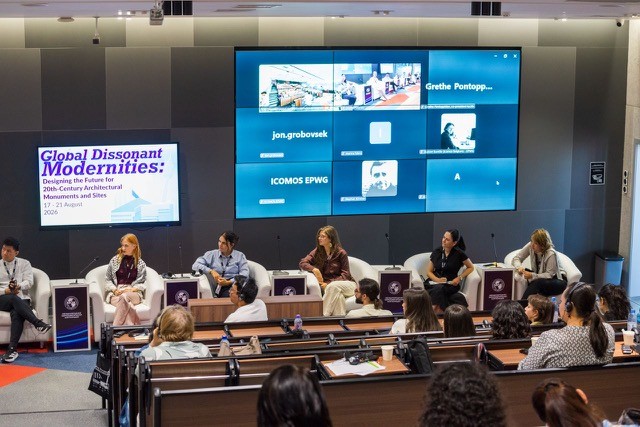
How can the architectural heritage of the twentieth century be preserved when its significance is interpreted in different ways and its future remains uncertain in many cases? This and many other questions were explored at the international conference “Global Dissonant Modernities - Designing the Future for 20th-Century Architectural Monuments and Sites,” held in Almaty, Kazakhstan, from 17 to 21 August 2026. Organised by the Emerging Professionals Working Group (EPWG) of ICOMOS Germany in collaboration with partners in Kazakhstan, the event brought together heritage professionals and emerging professionals from around the world.
At the heart of the conference was an examination of twentieth-century architectural heritage and the widely differing conditions under which it is preserved, interpreted and developed today. Contributions from countries ranging from Brazil to Singapore offered international perspectives on the values associated with modernist and post-war architecture, how conflicting or difficult legacies can be addressed, and what new approaches are needed to ensure their long-term conservation.
The term “dissonant modernities” refers not only to controversial buildings or those associated with difficult histories. Rather, it highlights the different values, memories and perspectives associated with twentieth-century architectural heritage-and raises the question of how these differing interpretations can be incorporated into heritage conservation processes. While some buildings have long been recognised as part of the established canon of architectural history, others are only beginning to gain recognition as heritage worthy of protection. This is particularly relevant in societies undergoing transformation, where the challenge lies in addressing buildings that carry architectural, social and political significance simultaneously.
A particular focus of the conference was therefore the exchange of regional and professional perspectives. Discussions highlighted that, while the conservation of twentieth-century architecture requires locally specific responses, there is considerable potential for international collaboration and mutual learning. The event also brought established experts together with young and emerging professionals, creating space for a wide range of experiences, methods and perspectives.
From Discourse to Practice
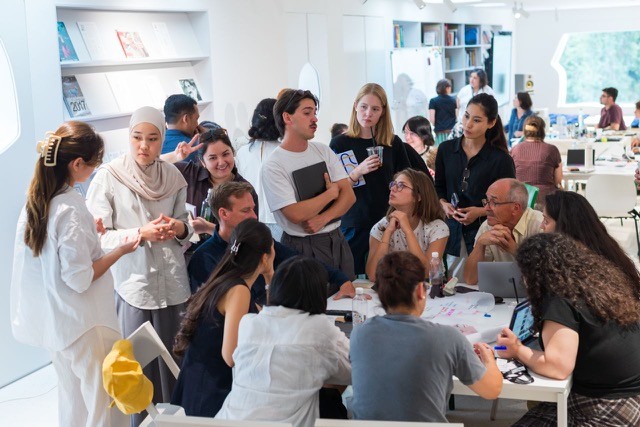
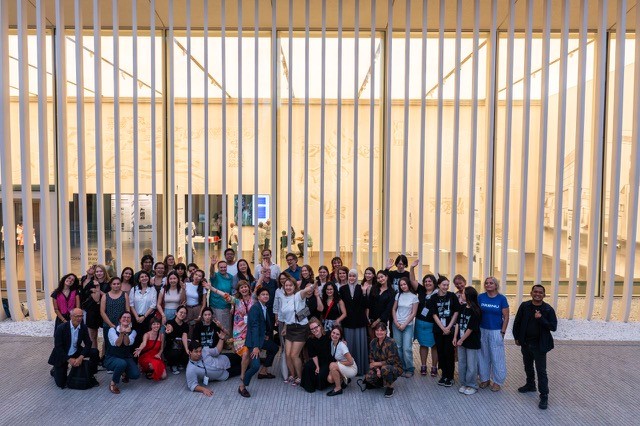
The conference was followed by a multi-day Emerging Professionals Workshop involving 31 participants from different countries. The workshop translated the international debate into concrete conservation practice. Its focus was the House of Government, designed by Moisei Ginzburg and now home to the Academy of Arts in Almaty.
The work centred on four interconnected perspectives: the cultural significance of the building; approaches to change and conservation; potential future uses and adaptations; and the building’s relationship with its urban context. Together, the participants analysed the building’s history, architecture and current condition, using their findings to develop approaches for a Conservation Management Plan (CMP).
The starting point was an exploration of the building’s cultural values and significance. Which local values and historical layers shape the site, and how can these be described within international frameworks such as the World Heritage Guidelines and the concept of Outstanding Universal Value (OUV)?
Building on this, attention turned to the building itself and to the question of how conservation can be approached as an ongoing process. The groups examined its physical condition, historical alterations and current threats, discussing which changes should be retained as part of the building’s history and where reinstatement or new interventions might be appropriate.
Another key focus was the building’s future use and potential adaptations. The House of Government was originally constructed as an administrative building, but for most of its history it has served an educational purpose. Against this background, the participants explored which future uses might be feasible and appropriate, and how adaptive interventions could be designed to preserve the building’s recognised cultural values.
Finally, the building was considered within its wider urban context rather than in isolation. The development of Almaty and its immediate surroundings has changed how the building is perceived and how it functions. Discussions addressed infrastructure, accessibility and connections to the pedestrian zone along Panfilova Street, as well as the possibility of establishing a buffer zone and developing future urban planning guidelines. This highlighted how the conservation of an individual historic building is always closely connected to the development of its urban surroundings.
Taken together, the four areas of work represented different scales of a shared question: What defines the building’s significance, how can this significance be preserved, and how can the building remain part of a vibrant city while contributing to its future development? The collaborative work is intended to continue beyond the event. Plans include the development of a joint resolution on the building’s future development and conservation.
Raising Awareness, Shaping the Future
One of the event’s key findings was that the long-term protection of twentieth-century architectural heritage depends on more than conservation methods and legal protection mechanisms. Public perception and social recognition of this heritage are equally important.
The discussions in Almaty highlighted the importance of communicating knowledge about twentieth-century architecture at an early stage and fostering awareness of its cultural value through school education. At the same time, spaces are needed in which young and emerging professionals can contribute their perspectives, take on responsibility and actively participate in developing future conservation strategies.
The event demonstrated that involving emerging professionals goes far beyond traditional approaches to supporting the next generation. As organisers, speakers and active contributors to the workshop, they brought their own professional perspectives to the discussion and assumed responsibility for addressing practical conservation challenges. This was one of the event’s particular strengths: Global Dissonant Modernities connected international professional debates with hands-on work while creating opportunities for the next generation of conservation professionals, architects and other heritage practitioners to participate actively.
International Collaboration as a Starting Point
The conference and workshop were made possible through close collaboration between ICOMOS Germany, ICOMOS Kazakhstan, the UNESCO Chair at KazGASA, ICOMOS ISC20C, the University Forum and other partners and institutions in Kazakhstan and internationally. The event was supported by the Foundation for West-Eastern Encounters (Stiftung West-Östliche Begegnungen). KazGASA and the Tselinny Center of Contemporary Culture hosted the event.
The intensive exchange between local stakeholders and international experts was particularly valuable. Almaty was not viewed merely as a case study illustrating the challenges of conserving twentieth-century architecture, but as a place for shared learning and the development of new perspectives.
Global Dissonant Modernities therefore not only raised important questions about the perception, assessment and conservation of twentieth-century architectural heritage, but also demonstrated the value of exchange across countries, disciplines and generations. The event also provided a starting point for further international collaborations. The discussions initiated in Almaty and the joint work on the House of Government are intended to continue and be developed further through future projects.
Ultimately, Global Dissonant Modernities was not only an examination of twentieth-century architectural heritage, but also a shared exploration of its future.
(Photos: Emil Kallias)
