ICOMOS EPWG Spring School "Learning from the Ahr Valley - Climate, Resilience and Cultural Heritage" (March 22-24, 2024)
Report of the Spring School 2024
The Emerging Professionals Working Group of ICOMOS Germany, in a spirit of collaboration and shared purpose, invited participants to a Spring School for the second time. Under the theme of 'Learning from Ahrtal - Climate, Resilience, and Heritage,' 15 students from various disciplines and countries gathered in Aachen from 22 March to 24, 2024. The workshop, a collective effort, focused on the impacts of the extreme rainfall events in the Ahr Valley in 2021. At that time, the region suffered from floods that significantly affected the lives of residents, the area, and the cultural heritage, leaving deep wounds. Climate science increasingly indicates that such extreme weather events will become more frequent and intense. The flood also demonstrated the vulnerability of cultural heritage and the urgent need to address and strengthen its resilience. This topic, a shared concern, was the focus of the three-day event.
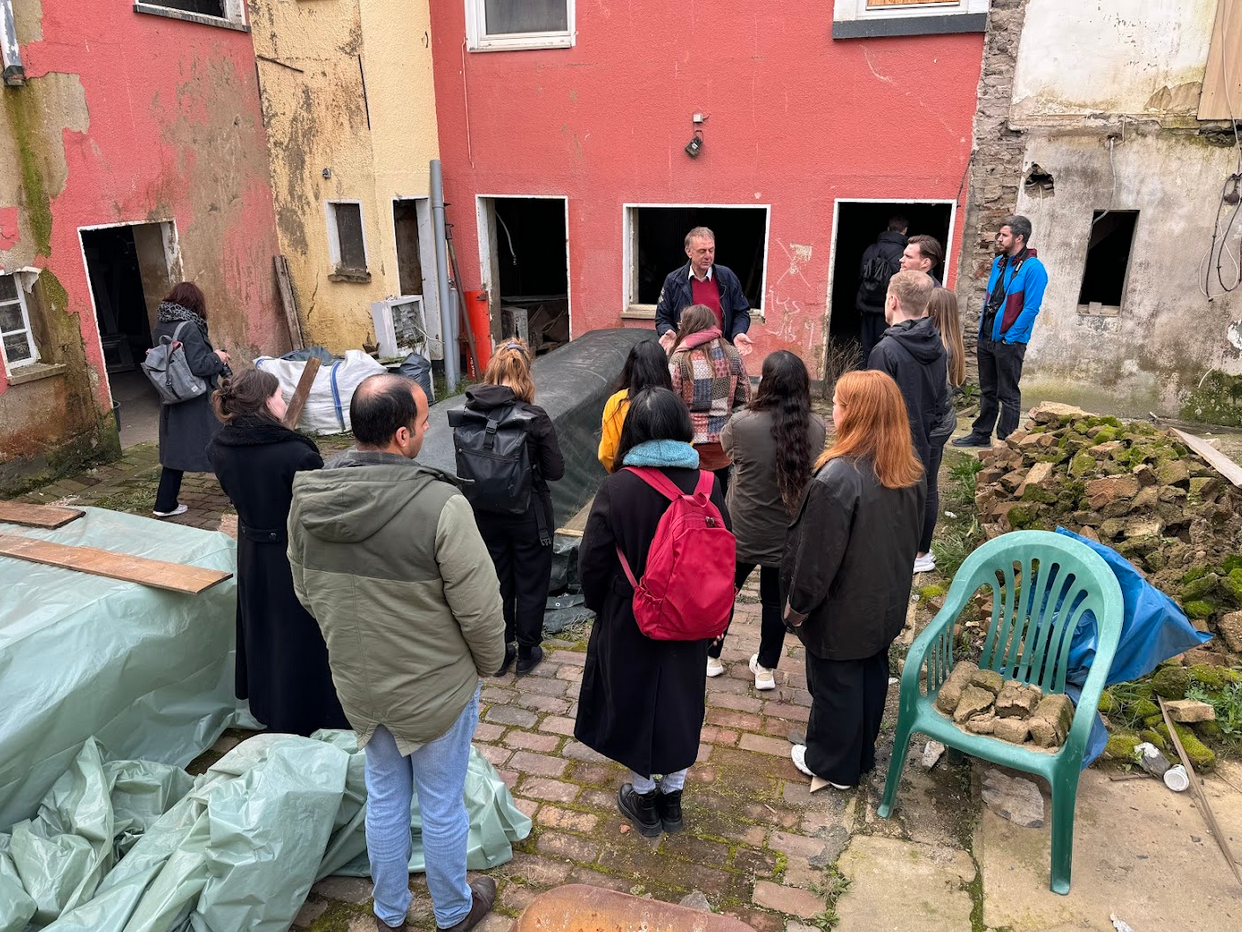
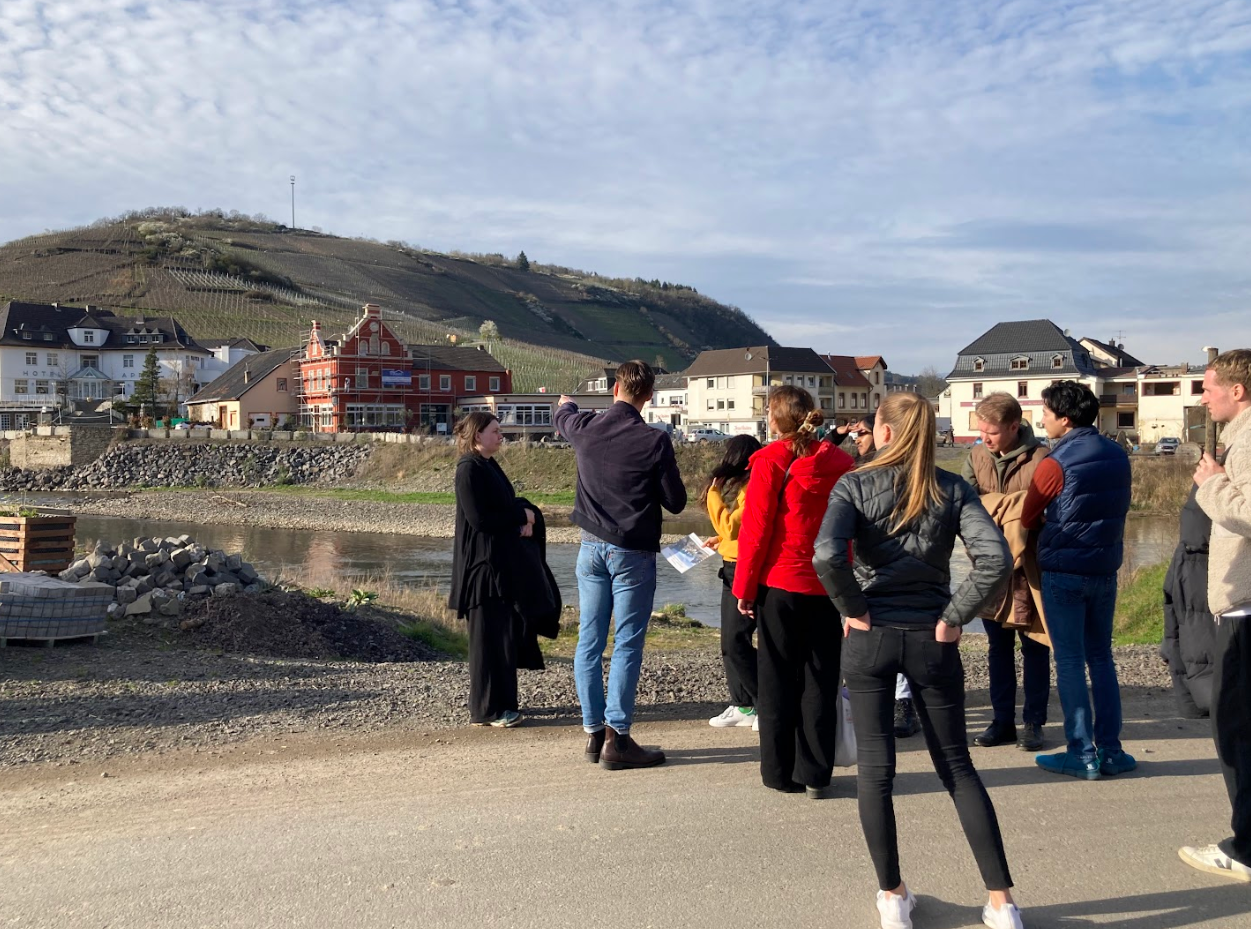
The first day of the Spring School, a rich learning experience, included a joint excursion to the Ahr Valley. The tour covered Bad Neuenahr-Ahrweiler, Dernau, and Rech. The tour covered Bad Neuenahr-Ahrweiler, Dernau, and Rech. Besides gaining impressive insights into the extent of the destruction and the rebuilding efforts, participants were allowed to deeply engage with the workshop's case study. The controversial demolition of the historic Nepomuk Bridge, its process, and handling were focal points of the Spring School. The visit, a significant learning opportunity, highlighted the complexity and multifaceted nature of the discourse. Students eager to learn received extensive information and insights from experts on-site.
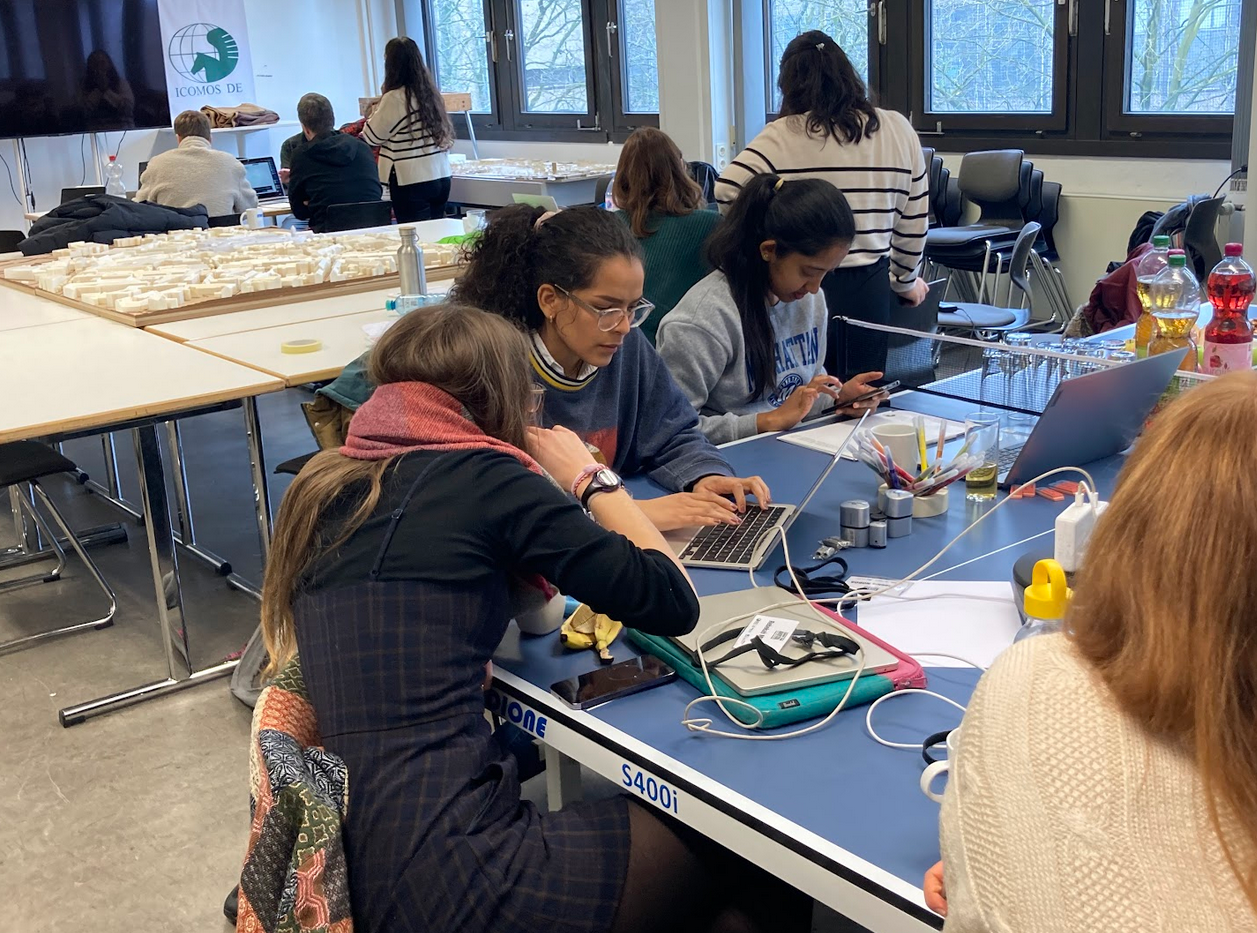
On the second day, all participants gathered at the RWTH Aachen premises to receive further input through several lectures. These lectures provided more profound insights into the current knowledge on heritage conservation and climate change, possible adaptation strategies, documentation methods for demolitions, and ideas for assessing damage after natural disasters. The knowledge about the Nepomuk Bridge was deepened through a lecture on the bridge's assessment report, which provided a comprehensive understanding of the bridge's history and its current condition. Following a joint discussion and exchange session, students were tasked with working in small groups to develop solutions for the future handling of the bridge's issues.
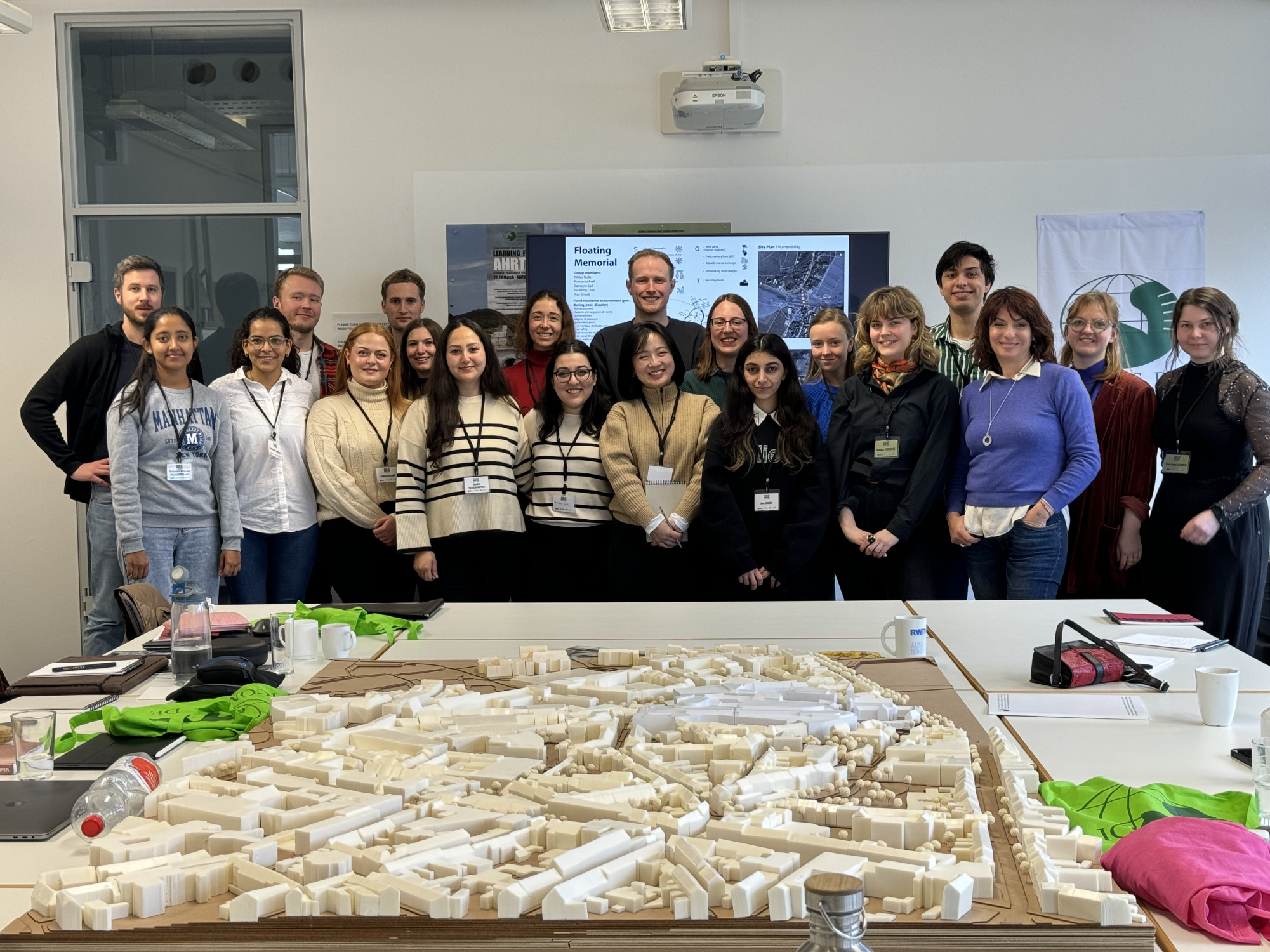
After another working phase the following day, the Spring School concluded with the presentation of group results. The group, consisting of Rebekah Mills, Domenica Noboa, Narmada Hansani Polgampalage, Sophia Salim, and Cansu Türker, focused on the social and societal aspects of a natural disaster. They faced the challenge of understanding the complex dynamics of a disaster-stricken community and the role of cultural heritage in fostering resilience. The Ahr Valley flood demonstrated remarkably how strong the region's solidarity and the resulting support systems are. This foundation is partly due to the decades-old associations and organizations that promote mutual assistance. Additionally, it was emphasized that cultural heritage serves as a multiplier that unites diverse interests, thus facilitating support.
Niklas Bulla, Franziska Prell, Samayro Saif, Ho Wing Choi, and Ava Omidi developed an architectural design for a new Nepomuk Bridge. This design aimed to remember the historic structure and the flood while creating a new meeting place. Their idea consisted of three pavilions floating on the Ahr, symbolizing vulnerability and a resilient solution for the future. Persistent memory and trauma inspired the light, flexible, and sensible architectural design.
The last group, including Ali Mohseni, Anton Petrukhin, Benjamin Gabler, Joel Jöbgen, and Simita Purkayastha, addressed the recurring process of abruptly demolishing old structures and immediately rebuilding them. They furthermore highlighted a historic process where those newer constructions are often demolished again, and the original building is rebuilt. A prominent example of such a process is the Humboldt Forum, earlier the Palace of the Republic and the Palace of Berlin.
All working groups produced remarkable results and sophisticated ideas within a short period. The outcomes have highlighted opportunities and potentials for handling our built cultural heritage in the face of climate change.